
fluffy vanilla cake is one of those things that sounds easy until you pull a pan out of the oven and it is somehow dense, dry, or weirdly flat. I have been there, and yes, I have stress eaten the “ugly” pieces straight from the cooling rack. The good news is that a really soft, tall vanilla cake is not about fancy tricks. It is about a few small habits that make a huge difference every single time. Let me walk you through the exact secrets I use in my own kitchen so you can bake with confidence.
Origins of this vanilla cake
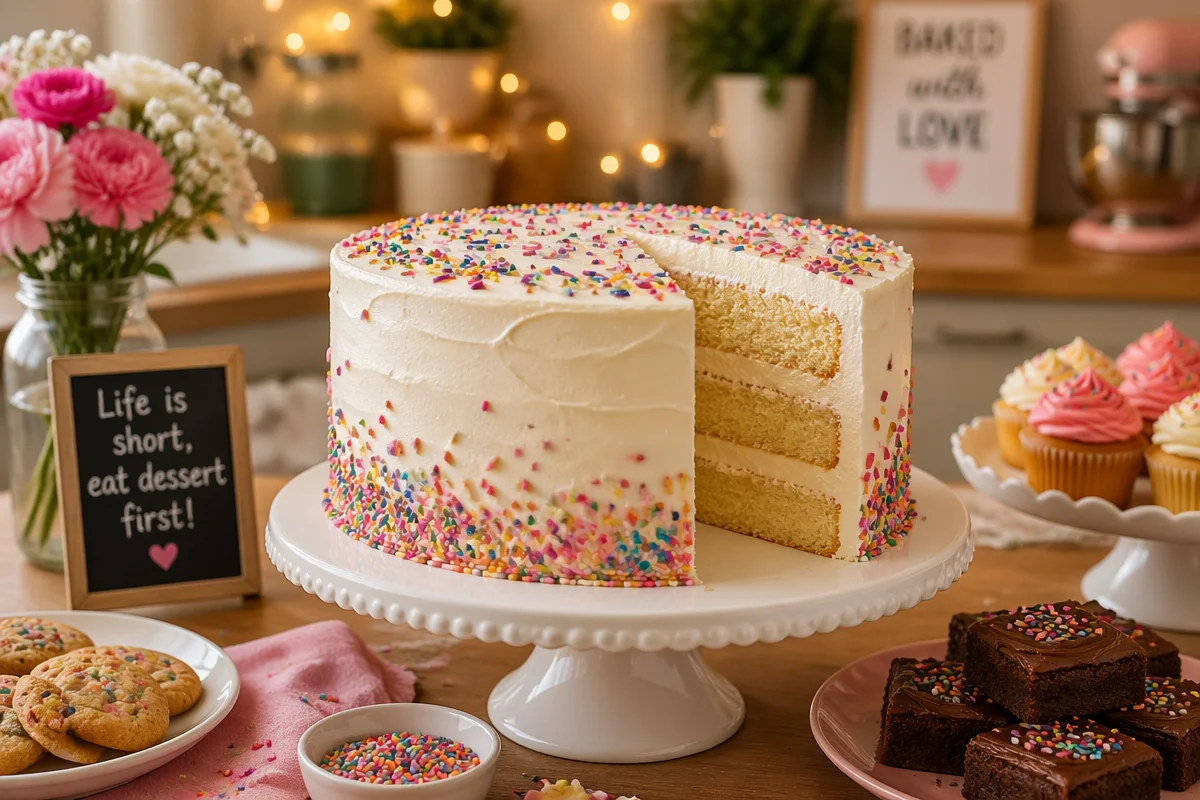
I did not grow up with a single, sacred family vanilla cake recipe written on a stained card. My “origin story” is more like a trail of birthdays, potlucks, and random Sunday cravings where I tested cakes until I found the one that felt right. The version I make now is inspired by classic butter cakes, the kind you see at bake sales, but with a couple of updates that make it extra tender.
Vanilla cake has been around forever because it is simple and flexible. It can be fancy with smooth frosting and piping, or casual with a dusting of powdered sugar. It is also the cake people request when they do not want chocolate, which is honestly more often than you would think.
My goal was always the same: a cake that bakes up even, smells like warm vanilla the second you open the oven, and stays soft on day two. The “perfectly fluffy” part comes from balance. Not too much flour, not too little fat, and just enough mixing to build structure without turning it chewy.
And yes, I still taste the batter. I know, I know. But it is the best way to make sure the vanilla flavor is actually there before you bake it.
Ingredients in my Best Vanilla Cake recipe
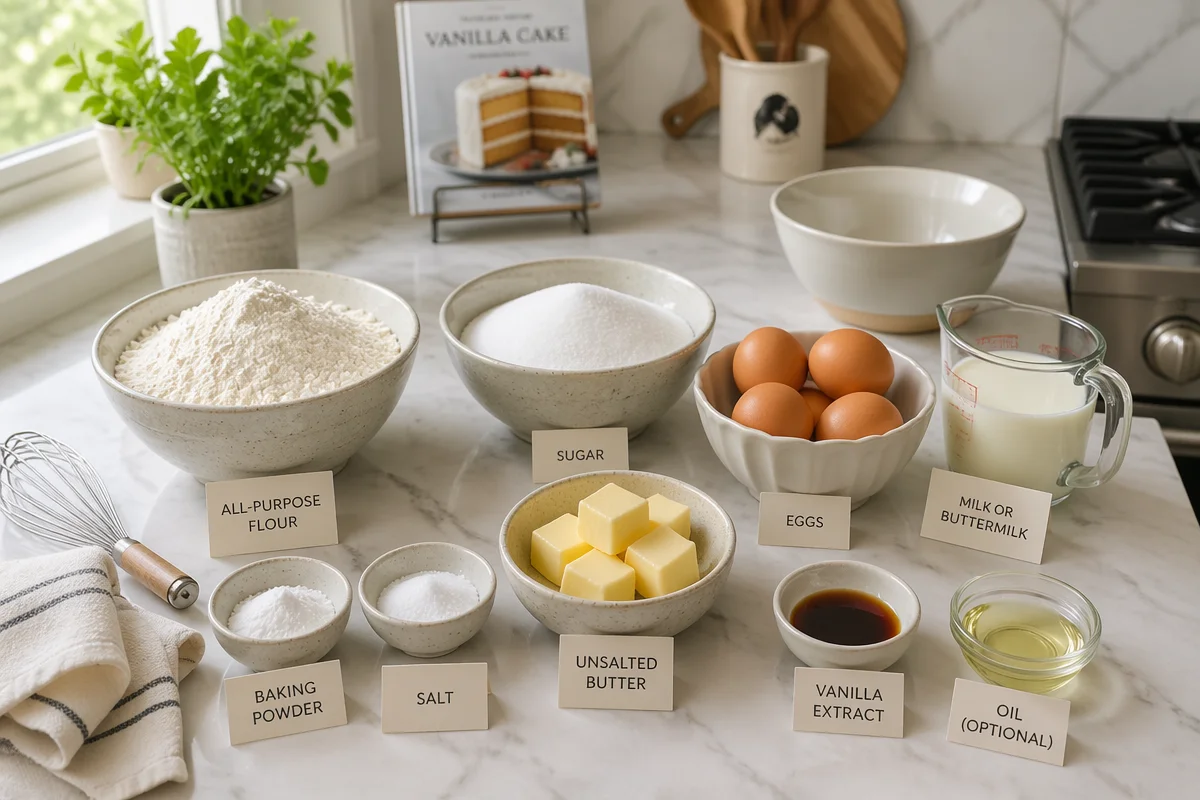
Let us talk ingredients, because this is where most vanilla cakes quietly go wrong. You do not need anything wild, but you do need to use the right versions of the basics. This is my go to list for a standard two layer cake, baked in two 8 inch pans.
- All purpose flour: gives the cake structure without making it heavy.
- Baking powder: this is your main lift, so make sure it is not expired.
- Salt: just a little, it sharpens the flavor and keeps it from tasting flat.
- Unsalted butter: for that classic vanilla cake taste and a soft crumb.
- Sugar: sweetens and helps trap air when mixed with butter.
- Eggs: bring richness and stability so the cake rises without collapsing.
- Milk or buttermilk: adds moisture. Buttermilk gives a slightly softer bite.
- Vanilla extract: use a good one you actually like. It is the main flavor.
- Optional oil: just a couple tablespoons can help keep it soft longer.
A quick note on vanilla: if your extract smells harsh or alcohol heavy, your cake will taste like that. I keep two kinds in my pantry: everyday vanilla for casual baking and a nicer one for birthdays and holidays.
Also, measure your flour carefully. If you scoop straight from the bag and pack it down, you will sneak in extra flour and the cake will feel tighter. I like to spoon it into the cup and level it off. Low effort, big reward.
Tips for Vanilla Cake success
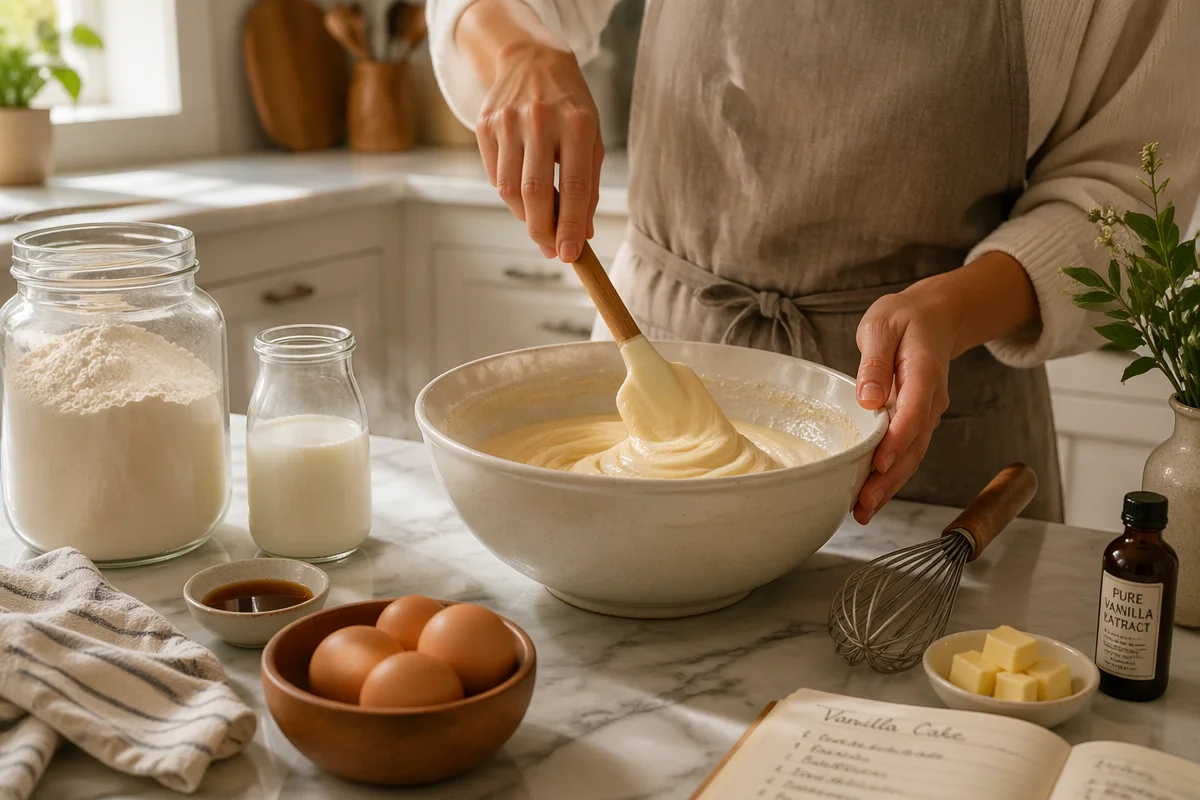
These are my five secrets. They are not complicated, but they are the exact things that changed my cakes from “fine” to wow. If you only remember a few things, make it these.
Secret 1: Start with room temperature ingredients
Cold butter and cold eggs do not mix smoothly, and that can leave you with a batter that looks curdled. More importantly, it does not trap air as well, which matters for a fluffy vanilla cake. I pull out butter, eggs, and milk about 45 minutes before baking. If I forget, I set the eggs in a bowl of warm water for 10 minutes. No drama.
Secret 2: Cream the butter and sugar until it looks lighter
This is where the “fluffy” starts. When you beat butter and sugar together, you are creating tiny air pockets. I watch for a noticeable change in color and texture. It should look paler and feel a bit airy, not gritty and heavy. This one step is such a big deal that I never rush it anymore.
Secret 3: Do not overmix once the flour goes in
I used to mix until the batter looked perfectly smooth, and my cake came out a bit bready. Now I mix just until the flour disappears. A few small lumps are totally fine. Overmixing makes the cake tougher and can steal that soft bite you want.
Secret 4: Use the right pan prep and do not wing it
I grease the pans, add parchment circles to the bottoms, then lightly flour the sides. This keeps the layers from sticking, and it also helps them rise evenly. If your cake clings to the pan, it can tear and lose height. And that is just a sad day.
Secret 5: Know when it is done, and do not overbake
Overbaking is the quiet cake killer. I start checking a few minutes early. The top should spring back when lightly touched, and a toothpick should come out with a couple moist crumbs. Not wet batter, but also not bone dry. If you wait for “perfectly clean,” you often end up with a drier cake.
One more little tip: once the cakes come out, I let them cool in the pan for about 10 minutes, then turn them out. If you leave them too long in a hot pan, the edges can overcook. Cooling matters more than people think.
Common Vanilla Cake Mistakes
If your vanilla cake is not coming out right, it is usually one of these common issues. I have done every single one of them at least once, usually when I was in a hurry and thought I could “just eyeball it.”
Mistake 1: Expired baking powder. If your cake does not rise, check the date. If you are not sure, put a little baking powder in hot water. It should fizz strongly. If it barely bubbles, toss it.
Mistake 2: Too much flour. This is the big one. Even a couple extra tablespoons can make the cake feel dense. Measure carefully, and do not pack it in.
Mistake 3: Mixing on high speed too long after adding flour. You get a cake that looks fine but eats a little chewy. Once flour goes in, go gentle.
Mistake 4: Oven temperature is off. Some ovens run hot or cold. If your cakes are doming too much, browning early, or baking unevenly, an inexpensive oven thermometer can be a lifesaver.
Mistake 5: Opening the oven a bunch of times. I know it is tempting. But opening the door lets heat out and can make the center sink. I peek through the window and wait until the cake looks mostly set.
If you want a consistent fluffy vanilla cake, consistency is your best friend. Same pans, same method, same checking time. Once you get it right, it starts to feel easy.
Ideas for frosting and decorating Vanilla Cake
This is the fun part. Vanilla cake is like a blank canvas, and you can take it in a million directions depending on your mood or the occasion. Here are a few ideas I actually make on repeat, not just pretty suggestions that never happen in real life.
Classic vanilla buttercream: Sweet, creamy, and super easy to spread. If it is too sweet for you, add a pinch of salt and a bit more vanilla to balance it.
Chocolate fudge frosting: The best choice when you want that vanilla and chocolate combo. It makes the vanilla flavor pop even more.
Cream cheese frosting: Slight tang, very cozy. This is my pick for spring gatherings or when I am adding berries.
Whipped cream and fruit: Light and fresh. Just know it is best the day you make it since whipped cream does not hold forever.
Simple syrup soak: If you want extra moisture, brush the layers with a little vanilla simple syrup before frosting. This is especially helpful if you are baking the layers a day ahead.
For decorating, I keep it simple. A swirl of frosting, a handful of sprinkles, maybe some fresh strawberries. If you are making it for a birthday, candles do most of the work anyway.
And if your frosting is not perfectly smooth, it is fine. A homemade cake is allowed to look homemade. It still tastes amazing, and people remember flavor more than flawless edges.
Common Questions
Q: How do I keep my vanilla cake from turning out dry?
A: Do not overbake it, measure flour carefully, and make sure you have enough liquid. Also cool it properly and wrap leftovers well.
Q: Can I make this cake ahead of time?
A: Yes. Bake the layers, cool completely, then wrap tightly and keep at room temp for one day or freeze for longer. Frost the day you serve if you can.
Q: Why did my cake sink in the middle?
A: Usually the oven door was opened too early, the batter was overmixed, or the cake was underbaked. An oven thermometer helps a lot here.
Q: Can I use vanilla bean paste instead of vanilla extract?
A: Absolutely. It gives a deeper vanilla flavor and those cute little specks. Use the same amount as extract in most cases.
Q: How full should I fill the cake pans?
A: About two thirds full is a safe rule. That gives the batter room to rise without spilling over.
Your next cake is going to be so much better
If you want a fluffy vanilla cake that feels soft, tastes like real vanilla, and rises like it should, it really comes down to the basics: room temp ingredients, proper creaming, gentle mixing, and not overbaking. Keep your tools simple and your steps steady, and you will get consistent results. The best part is once you nail it, you can dress it up a hundred different ways with frosting and toppings. Put on some music, preheat that oven, and go bake the cake you actually meant to make. You have got this.
Best Vanilla Cake
Ingredients
Method
- Preheat your oven to 350°F (175°C). Prepare two 8-inch round cake pans by greasing them and adding parchment circles to the bottoms.
- Ensure all ingredients are at room temperature before starting.
- In a mixing bowl, cream the softened unsalted butter and sugar until light and fluffy.
- Add eggs one at a time, mixing until fully incorporated after each addition.
- In another bowl, whisk together the all-purpose flour, baking powder, and salt.
- Gradually add the dry ingredients to the wet mixture, mixing just until combined.
- Gently fold in the milk or buttermilk and vanilla extract until the batter is smooth, being careful not to overmix.
- Pour the batter evenly into the prepared cake pans.
- Bake in the preheated oven for about 25 to 30 minutes, or until a toothpick inserted in the center comes out clean with a few moist crumbs.
- Once done, let the cakes cool in the pans for about 10 minutes before transferring to a wire rack to cool completely.
Notes
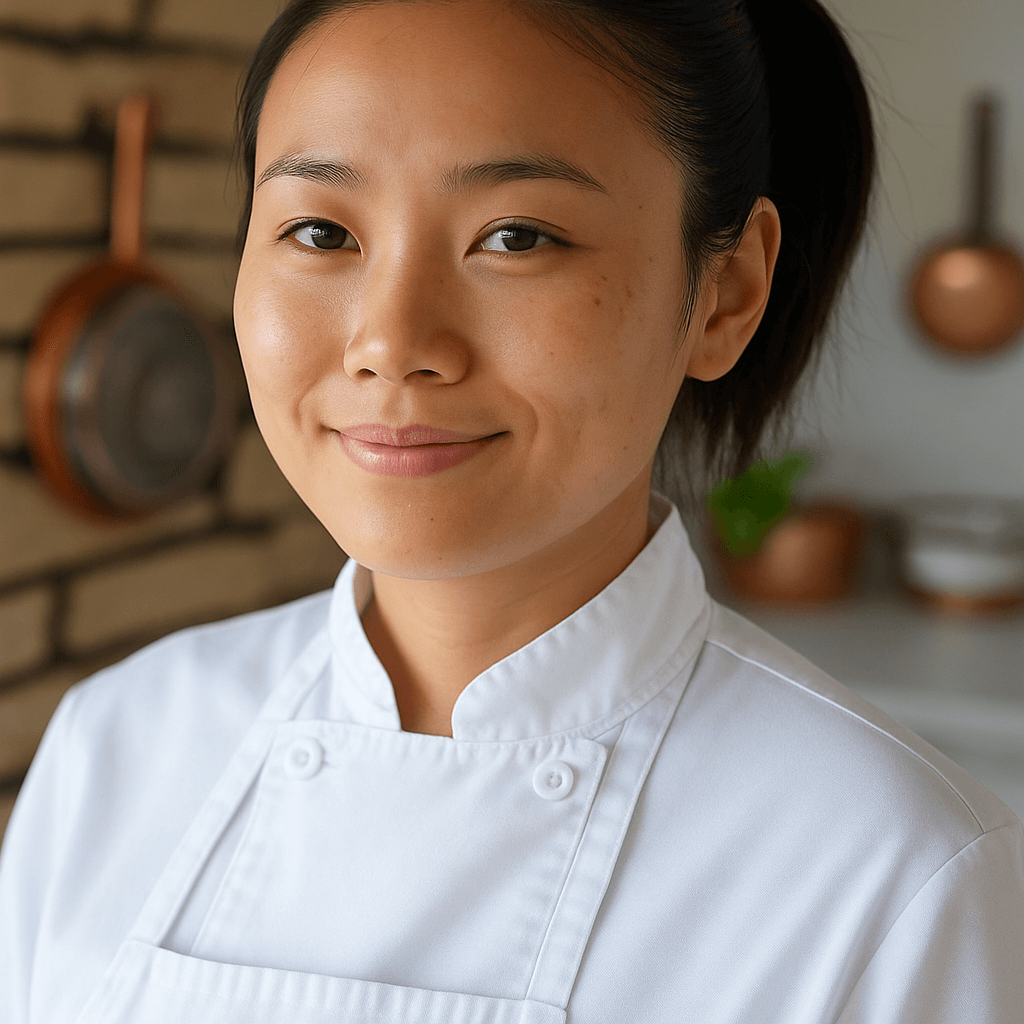
Name: Yumi HwagByline: Founder & Recipe Developer, YumimealsBio : Yumi tests weeknight-friendly air fryer, slow cooker, and BBQ recipes in a small home kitchen. She focuses on simple steps, real-family testing, and clear food-safety guidance. Contact: [email protected]